Why do we think remote viewers might be right about artificial meat? Read in the post.
Food Wars: Can You Remote View Unsafe Food Supplements?
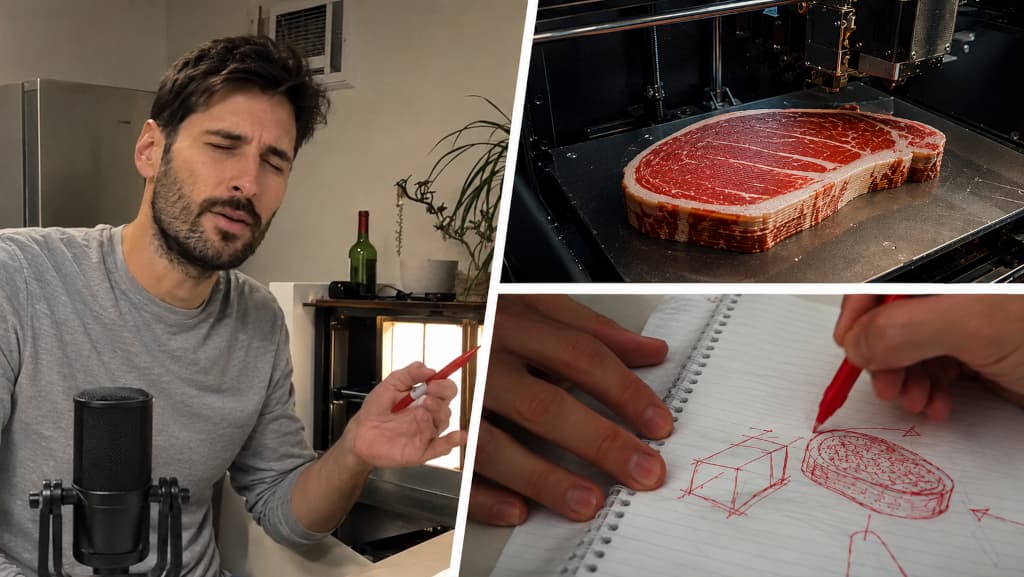
Did you know that 3D-printed meat may soon appear on supermarket shelves?
3D-Printed Meat Is Closer Than You Think
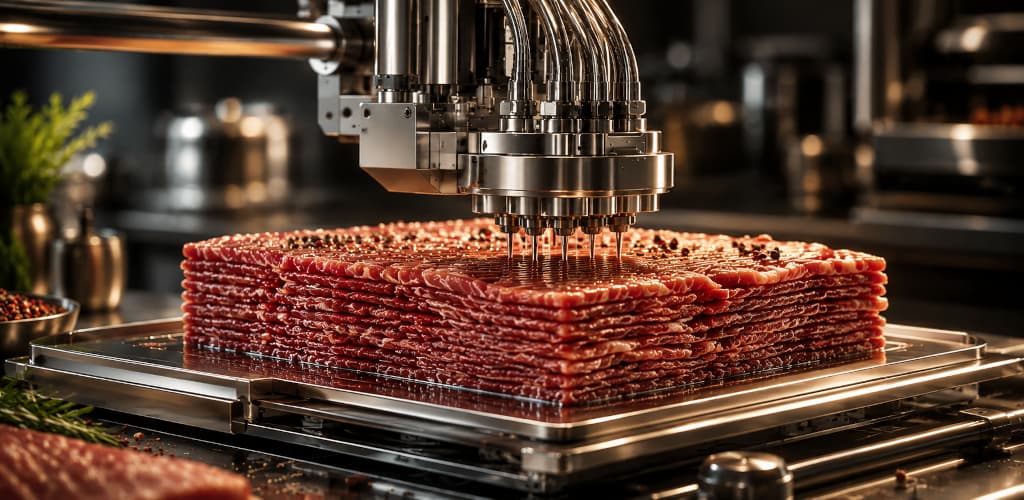
Scientists have already managed to recreate the texture of a real steak in the lab, and companies claim their 3D-printed vegan steaks look, feel, and taste just like real meat.
Would you actually want to buy one?
If regulators approve these products, they could become much more common over the next few years. But something about them still feels unnatural, doesn’t it? On one hand, we’re used to trusting government agencies to inspect and certify the food we eat. On the other hand, that feeling that “this just isn’t real food” is hard to ignore.
Who Are Remote Viewers, and Why Are They Skeptical?
Interestingly, many remote viewers say they share that same feeling. They’re believed to have trained their minds to perceive more than what our ordinary senses and conscious thinking usually tell us. Of course, you could say it’s all made up. But the government program was real, and the research was carried out by the same government people are expected to trust. And history has shown that governments are not always completely open with the public at the time events are happening.
If you haven’t already looked up who remote viewers are, here’s the short version. They are people who trained their extrasensory perception using a structured method developed and studied in American laboratories together with the U.S. military during the Cold War. Worldwide, there are probably only around a hundred well-known remote viewers, along with a few organizations that continue teaching the method.
Supporters say these people demonstrated their abilities under real-world conditions and produced statistical results that were difficult to explain as simple lucky guesses. They reportedly helped locate tunnels, accurately described places they had never visited, and even mentioned details like an extra room that investigators later said had existed years earlier. Cases like these are often presented as evidence of what we usually call paranormal abilities.
Most people think this is some kind of rare gift. But one of the main ideas within the remote viewing community is that these abilities exist in everyone — they simply need to be trained.
The training is actually pretty simple, and it’s surprisingly fun. If you want something more interesting, there’s an app called VEREVIO. It has different training exercises for developing different modalities of perception and remote viewing skills. You can practice with finding locations, perceiving natural phenomena, describing places with unusual energy, and many other kinds of things.
After a few months, you really start to notice a shift in the way you think and perceive things. We tried it ourselves, and it genuinely felt like there was something to it. That’s why some of the ideas remote viewers have about future technologies and even the actions of governments resonate with us.
Can You Trust Food Safety Agencies Alone?
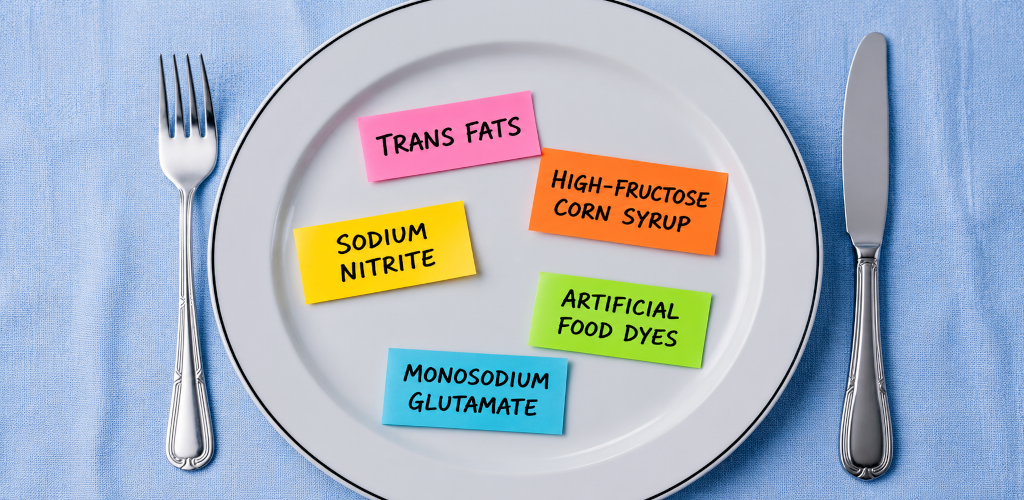
We tend to assume that if the government allows a food product to be sold, then it must be safe — even though we don’t always know what the long-term effects might be. We’ve seen this before with artificial food dyes. You probably heard that regulators have recently started banning or phasing out some synthetic colorings that were once considered safe. That’s interesting, isn’t it? For years, they weren’t seen as a problem, and then the scientific view began to change.
So it raises a bigger question. Should we simply trust that regulators always get it right the first time? Or is it worth listening to people like remote viewers, who don’t share the same optimism about technologies such as artificial meat?
Could Remote Viewing Reveal Long-Term Food Risks?
In reality, most remote viewers aren’t that interested in food. They’re usually much more interested in the future. Some of them even have predicted wars or military attacks months, and in some cases even years, before they happened.
When it comes to food, the idea is a little different. In theory, you could try to look at the long-term effects. For example, what happens if someone consumes a particular food additive for twenty years? But that’s considered advanced remote viewing and requires a lot of experience.
What we do support is developing your own intuition instead of relying entirely on government food safety agencies. There’s nothing wrong with regulations, but history has shown that scientific understanding changes. Sometimes governments approve products that are later reconsidered as new evidence emerges.
At the end of the day, none of us knows everything that’s in our food or what the long-term effects of every ingredient might be. By the time a problem becomes obvious, certain compounds may have been consumed for years. That’s exactly why we think it’s worth developing another layer of awareness instead of depending on a single source of reassurance.