Garlic looks easy on paper. Push a clove into the soil, wait long enough, and something will usually grow. That is why beginners get caught out. Garlic is forgiving enough to sprout, but not forgiving enough to produce big, full-flavored bulbs if the setup is off from the start.
Most frustration comes down to a few quiet mistakes: planting supermarket cloves, crowding containers, watering by habit instead of by need, or assuming a pot will behave like a raised bed. If you want to know how to grow garlic at home and harvest bulbs worth cooking with, those details matter much more than people expect.
Start with the right cloves
The first mistake usually happens before planting day. A grocery-store bulb may sprout, but it can also be poorly suited to your climate or selected for storage rather than garden performance. For home growing, seed garlic or named varieties from a reputable grower are a safer bet. Start with large, firm cloves. Small planting cloves usually lead to small bulbs.
Timing matters too. In many climates, garlic is planted in autumn so the cloves can root before winter and bulk up properly the following season. Spring planting can still produce a crop, but it often gives smaller bulbs. One of the most useful garlic planting tips is also one of the simplest: break the bulb apart close to planting time, keep the papery skins on, and plant only the best cloves.
Garlic doesn’t behave the same in every space
A raised bed often gives beginners the easiest version of garlic growing. The soil warms quickly, drains well, and still holds moisture better than most containers. A small backyard plot can work just as well, but only if the soil is loose enough for bulbs to swell and not stay wet for long. Heavy, compacted ground is where garlic starts sulking.
Growing garlic in pots needs a different mindset. Containers are great for balcony garlic growing and other tight spaces, but they magnify every error. They dry out faster in warm weather, stay colder around the roots in winter, and can turn soggy if drainage is poor. A shallow decorative planter is rarely enough. Garlic needs a container with real depth, real drainage, and enough width that the cloves are not elbowing each other from day one.
That is why garlic for small gardens is less about squeezing plants in and more about matching the crop to the space. A well-sized pot with six healthy cloves will usually beat an overcrowded one holding ten.
The beginner mistakes that really cost you bulb size
Spacing is one of the biggest beginner garlic growing mistakes. In a small garden, the temptation is to fit in one more clove. Garlic rarely rewards that instinct. Crowded plants compete for light, water, and nutrients, and the bulbs stay smaller. In beds and rows, a few inches between cloves is usually sensible. In pots, being realistic matters even more: fewer plants in a properly sized container will usually outperform a crowded one.
Planting depth is another common wobble. Garlic cloves should go in upright, root end down and pointed tip up. Plant too shallowly and they can heave upward or dry out. Go much too deep and growth may be slower than it needs to be. The exact depth varies a bit by climate and setup, but the clove should be well covered rather than barely tucked in.
Watering separates decent garlic from disappointing garlic. The plants want consistent moisture while they are actively growing, especially in spring when leaf growth is building the bulb. What they do not want is a cycle of drought, drenching, and neglect. In pots, drainage holes are non-negotiable. In backyard soil, texture matters just as much as how often you reach for the hose.
Feeding is easy to overcomplicate, but ignoring fertility is a mistake too. Garlic responds well to soil with good organic matter and enough nitrogen early in the season. That does not mean feeding heavily all year. Once bulbing is underway, late nitrogen can push leafy growth instead of helping the bulbs. Compost-rich soil and a sensible early feeding schedule usually do more than constant tinkering.
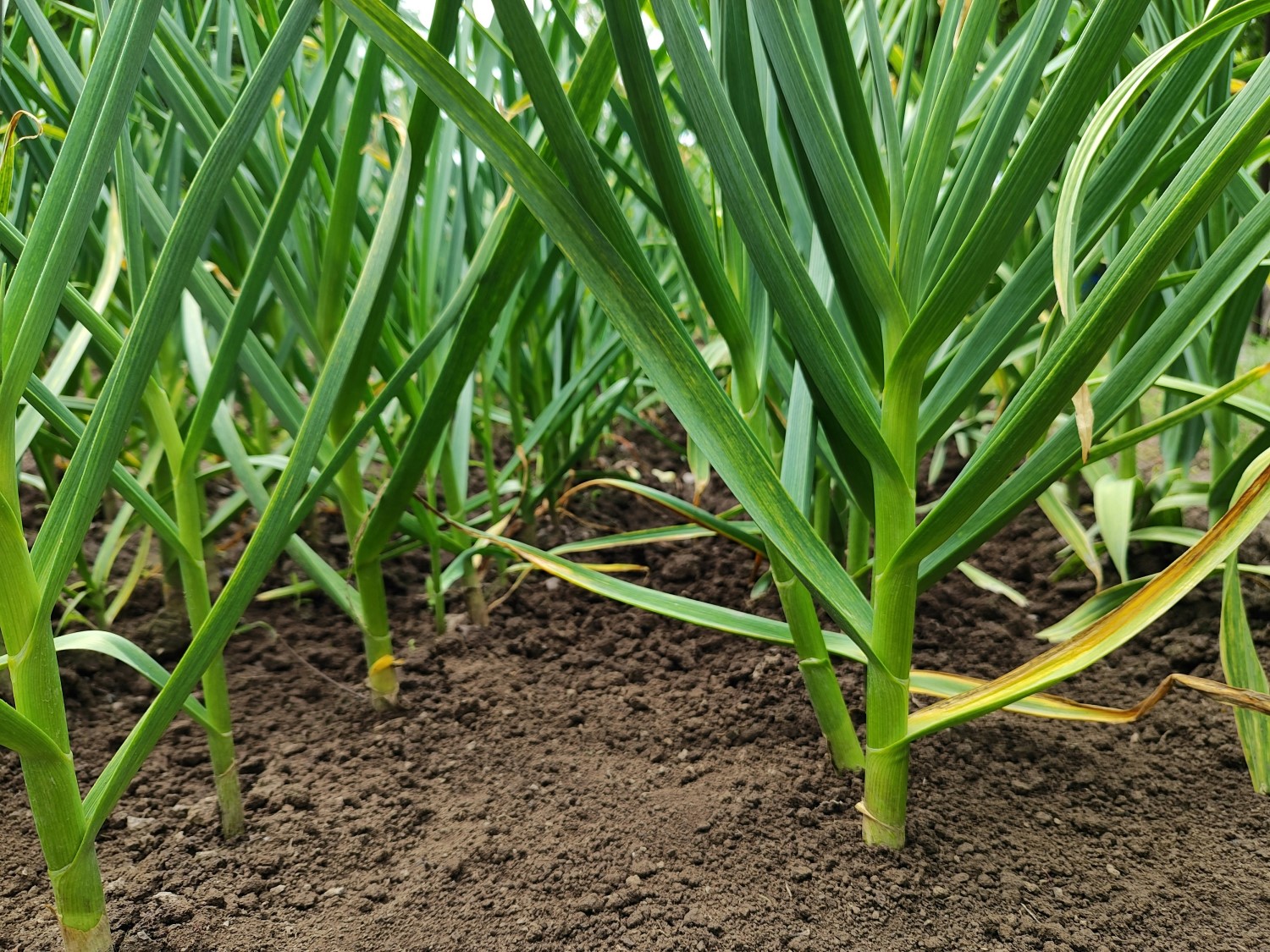
If you are growing hardneck garlic, do not forget the scapes. They look ornamental when they curl, and they are edible, but leaving them on for too long can reduce bulb size. Cut or snap them once they start to curl and before they fully straighten. It is a small job with a visible payoff. And keep weeds down while the crop is young: garlic is not especially competitive, and a weedy bed can quietly steal growth.
Do not blow the finish
The last mistake comes right at the end. New growers often pull garlic too early because the tops look messy, or leave it too long hoping for a bigger bulb. Both can disappoint. A useful rule is to watch the leaves rather than the calendar. When the lower leaves have browned and several upper ones are still green, check a bulb. If the cloves are filling the wrapper, harvest time is close.
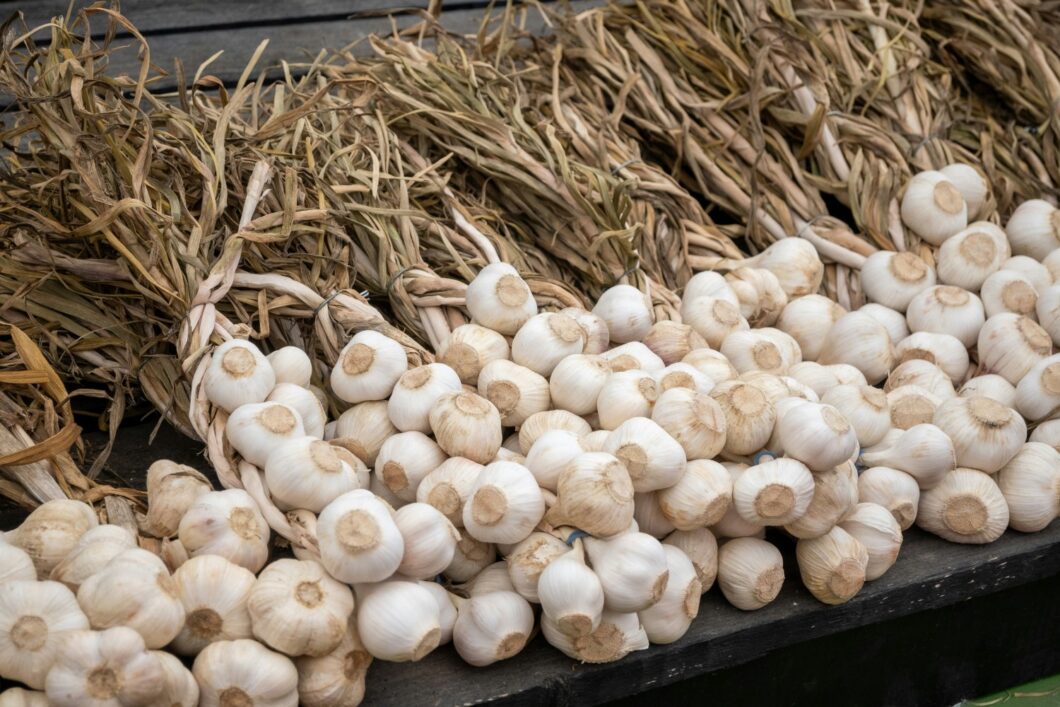
After lifting, do not scrub the bulbs or leave them baking in direct sun. Shake off loose soil and cure them in a dry, airy, shaded place for a few weeks. That quiet step is what turns a decent crop into garlic that stores well and tastes settled rather than harsh.
A better way to think about homegrown garlic
Garlic does not need a huge plot or expert-level technique. It needs sun, drainage, room, and a bit of patience. A raised bed gives you the most margin for error. A backyard plot can be highly productive if the soil is loose and sunny. A balcony pot asks for more attention, but it can still deliver excellent bulbs. Get those basics right, and garlic usually meets you halfway.